
Heat
Extreme heat is very dangerous to human health. It can cause heat stress and heat stroke, as well as heart, kidney and respiratory failure, potentially resulting in death. Heat also increases the risk of violence between individuals and across communities.
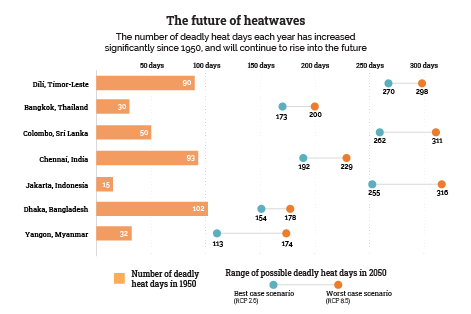
With expectations of higher temperatures, more heat waves and changing humidity across South-East Asia, the potential health impacts are substantial. This is especially true in tropical areas, where the episodes of extreme heat are likely to be the greatest.
Along with the direct impacts on the human body, heat can worsen air pollution, wildfires and droughts. This can lead to:
- Risk of increased malnutrition due to declines in crop production and the nutritional value of crops
- More airborne toxins, dust and smoke from fires
- More mental health problems due to direct heat, economic stress and incidents of violence
Heat can affect the economy and livelihoods through lower labour output and an associated drop in incomes. People who do strenuous work outdoors are particularly at risk. Low-income workers are often paid at a piece rate, which discourages rest or water breaks. Often, they lack protective gear and access to cooling. Heat may also contribute to more workplace injuries as workers contend with sweaty palms, fogged glasses, dizziness and reduced brain function.
Climate drivers

Who is at risk?
- People with underlying health conditions such as heart or lung disease, and those who are obese
- Older people, who often cannot sweat effectively, making it difficult to cool the body
- Young children, whose bodies cannot yet regulate temperature well
- Pregnant women, who are more likely to overheat
- The poor, who may not have access to cooling
- People who do strenuous work outdoors
Ways we can adapt
Individuals and communities can...
- Stay hydrated
- Take breaks when working in heat
- Make a personal plan for cooling off during heat waves
- Learn the warning signs of heat exhaustion/stroke
- Collaborate with local leaders on community heat action plans
Policymakers and other health sector leaders can...
- Develop early warning and communication systems for heat emergencies
- Provide cooling centres
-
Ensure prevention through design, by, for example:
- Establishing building codes that prioritise cooling designs
- Introducing easy-win designs, such as locating maternity wards on the lowest floor of hospitals, which is usually the coolest
- Standardise guidance on ways to reduce risk, especially in the workplace, including use of personal protective equipment, rest breaks, provision of hydration, work hours, etc.
- Building more green spaces and parks in cities, investing in such as parks with tree planting efforts and s and structures with green roofs
- Conserve energy to reduce service disruptions and stress on electricity systems
Heat takes a toll on children in the Maldives
According to climate projections, the atoll nation of Maldives – 80% of which lies below 1 metre of average sea level – could be underwater by the end of this century. Despite this, a majority of children interviewed in a 2018 study said that sea-level rise and erosion were not their greatest climate concerns. The biggest problem, they said, was heat.
The UNICEF study of 6 islands in Maldives, based on interviews with 86 children aged 9-18 and 141 par
Read more
