Disasters
One of the most obvious and inescapable impacts of climate change is the increase in extreme weather events. Since the year 2000, the frequency of climate change-related weather disasters has increased by 46%. Rising ocean temperatures and changing rainfall patterns are fuelling stronger and more frequent cyclones, tropical storms and floods. Typical storm tracks are also changing, making more people vulnerable to storms.
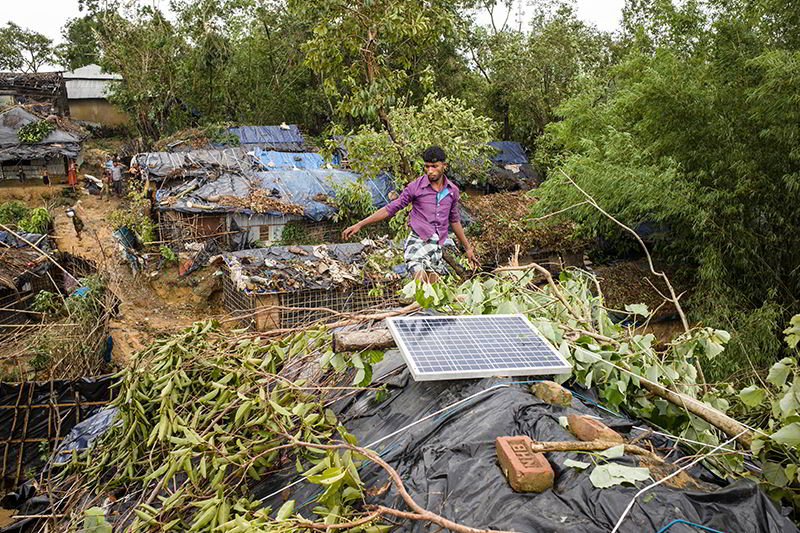
When a disaster hits, people may die or be injured, and infrastructure may be destroyed. Beyond the immediate impacts, the health of those affected may be compromised for some time after. For example, floods may expose people to water contaminated with dangerous organisms or toxins, sparking disease outbreaks. A lesser-known but still devastating impact is the struggle people may have with their mental health. Teenagers, in particular, are susceptible to post-traumatic stress disorder (PTSD) in the wake of a disaster.
Increasingly, disaster preparation is a key element of climate change adaptation. Planning focuses on both the immediate emergency response and the continuity of services after the emergency. Hospitals and other medical facilities are a good place to start: they are essential both to the emergency response and long-term recovery. The location and design of buildings, backup energy and water supplies, and redundant supply chains are all critical in building resilience and ensuring that health care facilities are able to maintain their services.
 Schools, too, are a top priority. As with medical facilities, the climate resilience of school buildings will enable children to get back to school after a disaster and provide a hub for social services. This is important for all children, but especially girls, who are more likely to be withdrawn from schools due to financial strain or the need for their assistance to support recovery at home.
Climate drivers

Who is at risk?
- People living in coastal areas or river floodplains, especially those in low-lying areas
- Children under 5 years, who are highly susceptible to diarrhoeal and other diseases
- The poor, who often live in fragile shelters and have difficulty relocating
- The elderly, who may not be able to flee easily
- Those experiencing trauma, who are at particular risk of mental health problems
Ways we can adapt
Individuals and communities can...
- Develop community disaster plans focused on local emergency response and support systems
- Advocate for climate-sensitive site selection and construction standards for both hospitals and schools
- Collaborate with local health officers on planning to address post-disaster mental health concerns, especially PTSD in children
- Collaborate with school and other local officials on plans to maintain continuity of education for students, especially girls
- Develop community disaster plans focused on local emergency response and support systems
Policymakers and other health sector leaders can...
- Use early warning and predictive models to prepare for provision of medical supplies, including vaccines and treatments and medical personnel
- Provide specialised training to medical professionals, care providers and first responders to build awareness of disaster-specific health impacts, especially mental health
- Embrace supply chain redundancy to ensure alternate means of acquiring and distributing medicines and supplies
- Factor extreme weather events into site selection and construction planning, including backup water, sanitation and energy systems
- Strengthen disaster preparation to ensure access to continuity of access/transportation to medical facilities and maintenance of water and energy systems and community food and water provision
- Incorporate analysis of changing disaster strength and frequency into disaster risk management planning
- Strengthen preparation before disasters to ensure access to health services, especially water methodologies
- Implement WHO’s Framework for Mental Health and Psychosocial Support after Tsunamis
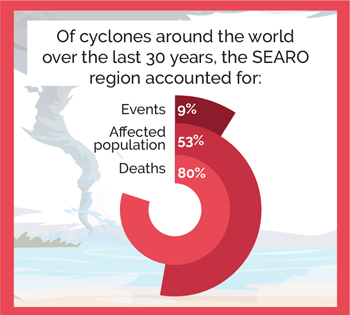
Reducing cyclone deaths
Worldwide, from 1980-2009, the number of cyclones and the size of the populations hit by them have steadily increased over time. Mortality, however, did not follow that trend: the average number of deaths per storm decreased.
The big exceptions were Cyclone Gorky in Bangladesh in 1991 and Cyclone Nargis in Myanmar in 2008, which each killed roughly 138,000 people. That figure represents two-thirds of the 412,000 global deaths in those 3 decades. South-East Asia a
Read more