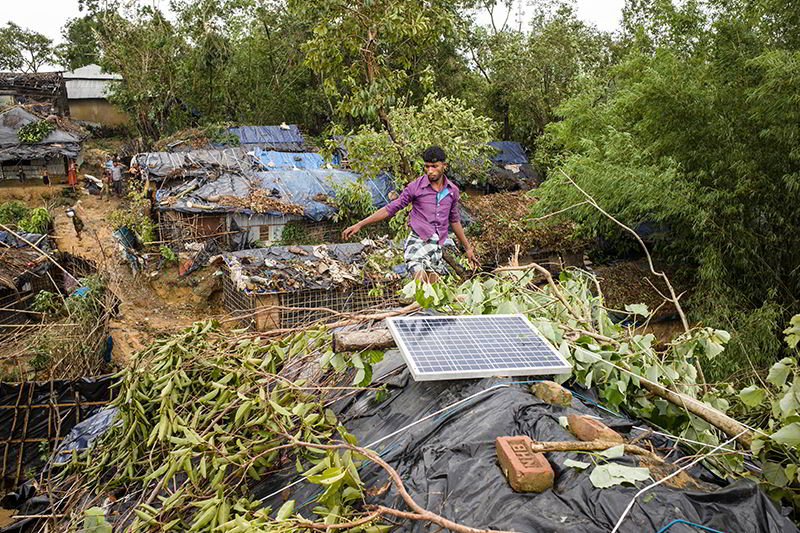
Worldwide, from 1980-2009, the number of cyclones and the size of the populations hit by them have steadily increased over time. Mortality, however, did not follow that trend: the average number of deaths per storm decreased.
The big exceptions were Cyclone Gorky in Bangladesh in 1991 and Cyclone Nargis in Myanmar in 2008, which each killed roughly 138,000 people. That figure represents two-thirds of the 412,000 global deaths in those 3 decades. South-East Asia accounted for only 9% of all events, but had 53% of the affected population and 80% of all deaths.
In many countries, major improvements in forecasting, early warning systems, and evacuation and shelter procedures explain why deaths per storm are dropping. But why were tolls exceptionally high in those 2 particular storms?
Population density and overall vulnerability of the affected populations are partial explanations: many poor people lived in low-lying areas highly susceptible to storm surge. Most drowned in the surge.
With expectations of more intense and frequent cyclones and tropical storms, these experiences offer lessons for future disaster planning and climate adaptation, particularly given that populations are expected to grow substantially in cities and in coastal areas.
In recent decades, both Bangladesh and Myanmar have made significant investments in building forecasting, early warning and evacuation systems. Yet challenges remain, especially for women.
In the developed world, men are more likely to die during cyclones than women. In the developing world, women are more likely to die.
Research in Bangladesh has found that women face several obstacles including:
- Comparatively less physical strength than men to run, swim or cling to objects during storms surges
- Impaired mobility because of clothing
- Social expectations that they must wait for husbands or other male family members to give them guidance or permission to flee
- Social isolation that may prevent them from receiving warnings
- Sense of obligation to protect and save children or elderly family members before themselves
The good news is that government and civil society partners across South-East Asia are strengthening disaster risk management and response planning to address the particular needs of women. Among their strategies: active collaboration with others to build local communication and outreach systems that will help women become as resilient as all others in their communities – both before and in the wake of disasters.