Deciding on tactics
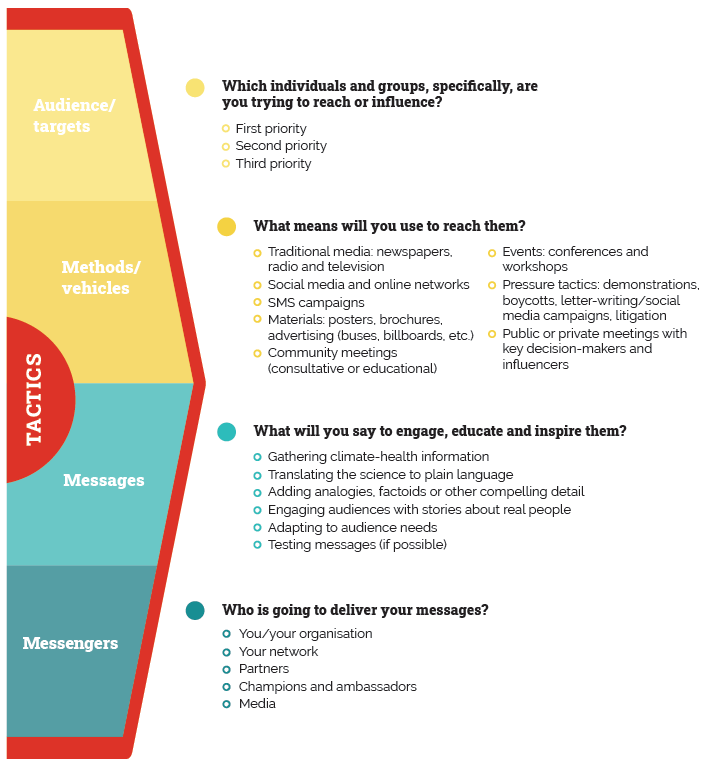
Once you answer the questions about what you want to do and why you want to do it, the next matter is the “how.” That is, what are the practical approaches and actions that will make it happen? Like the scoping activity in Tool 1, this next stage of strategy development is intended to further sharpen the focus of your campaign. The more you invest early on in making these strategic decisions, the more likely you are to have an impact.
Advocacy approaches can be grouped simply in 3 categories: collaborating, communicating and mobilising. In practice, most advocacy efforts will use some combination of these approaches. For example, a street march may involve collaboration with local politicians, communication to raise awareness among target audiences, and mobilisation to recruit people to participate. What matters most is the approach or combination of approaches that will be most effective in advancing your objectives.
Download the Matching resources and opportunities to ambitions worksheet
Make strategic choices
When it comes to tactics, quality is more important than quantity. Choose approaches that you can manage effectively; that will increase your chances of making an impact.
Multiple tactics to combat air pollution
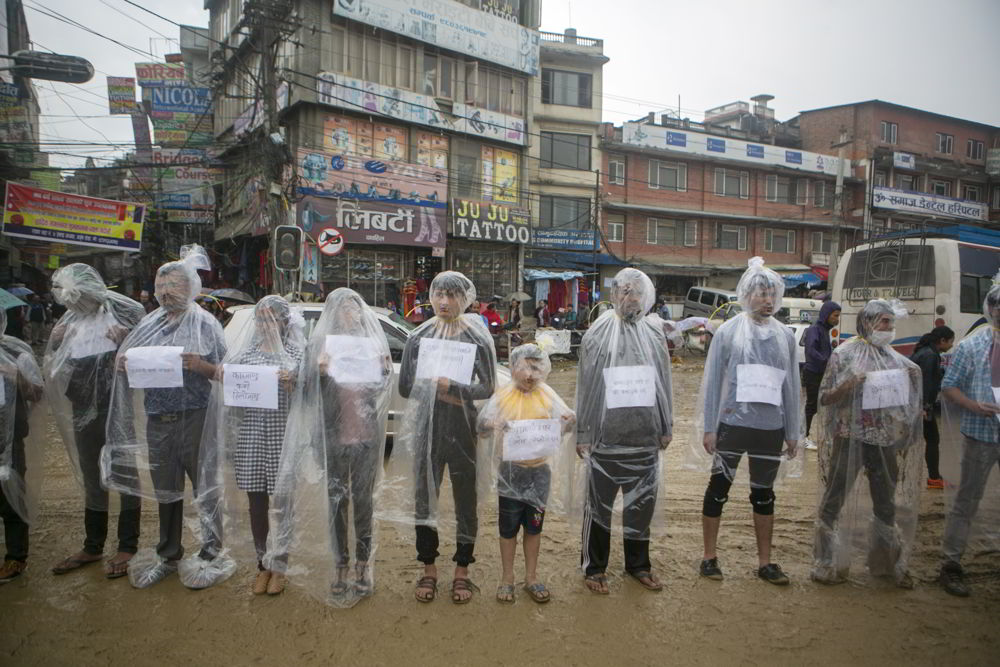
Several years ago, a handful of Kathmandu neighbours decided that a first step toward reducing local air pollution – and the burden of disease that goes with it – was to ensure citizens knew the facts about the problem. It would be great, they thought, if people could check air quality on a daily basis, much as they would check the weather.
At that time, the government of Nepal was not able to provide regular air quality information. After hearing about citizen-driven ai
Read more