
Nutrition
As climate change dramatically influences the production and availability of staple food sources, it will have an equally stark effect on human nutrition. In South-East Asia, higher temperatures, episodes of flooding and drought, rising sea levels, warming seas and more frequent extreme events will alter the nutrition situation in various ways.
The impacts are likely to include significant declines in crop production, the nutritional value of staple foods, fishing catch, and livestock productivity. It may also contribute to changing patterns of crop and livestock disease and increased pests. In certain countries, cash crops, including coffee in Timor-Leste and tea in Sri Lanka, may also decline, affecting livelihoods and local economies.
The ecosystems that support food production will also suffer, with decreased pollinator populations and increased weeds, pests and fungus. Saltwater incursion in coastal areas, resulting from sea-level rise, is making arable land unusable. Low soil moisture, which adds to crop stress, will propel declines in yield.
These complex dynamics highlight the need for careful planning to adapt local agricultural production. For example, the rising concentration of atmospheric carbon dioxide (CO2), while generally a harmful driver of climate change, may offer a short-term boost to performance of crops such as wheat, rice and soybeans by increasing rates of photosynthesis and water use efficiency. That gain may be offset, however, as CO2 levels continue to rise. In addition, protein content may decline and yields may drop when air temperatures exceed 30°C. On top of that, current levels of ozone pollution globally are estimated to have suppressed wheat and soybean yields by 6-9%.
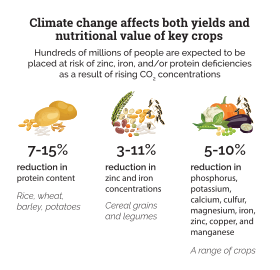 The sum of these challenges is a likely increase in the risk of undernutrition, including micronutrient deficiencies. It may go farther to reverse major gains in recent decades on stunting; one study forecasts an increase in severe stunting in South Asia of 61%. An additional challenge to tackling malnutrition in Asia is the dual burdens of undernutrition and obesity, at times occurring in the same individual, household and community. Lower crop production may trigger price shocks, forcing poorer households to reject more expensive foods, such as fresh fruits and vegetables, in favour of lower-cost, high-calorie products such as processed foods.
Climate drivers





Who is at risk?
- Children under 5, who are at risk of vitamin and micronutrient deficiencies and impaired mental development
- Children and adults already struggling with undernutrition
- Adults, who face increased risk of heart disease, stroke, diabetes and certain cancers as a result of reduced dietary intake of fruits, vegetables, nuts and seeds.
Ways we can adapt
Individuals and communities can...
- Disseminate information and spark interest in climate-smart practices related to agriculture, animal husbandry and fishing
- Engage leaders in collaborative, inclusive decision-making on integrated land and water management
- Advocate for more effective climate information services and support for the use of climate-smart agriculture and fishing practices
Policymakers and other health sector leaders can...
- Introduce climate-smart practices, especially those that decrease water loss from soils or preserve water, and increase the nutrient value of soil and crop productivity
- Use weather and climate services to better select seeds, time crop planting and harvesting dates, and provide guidance on other management intervention
- Develop new seeds that can better deal with expected changes and treatments for crop diseases and pests
- Improve dietary diversity through expanding types of crops grown and increasing use of home gardens
- Transition to climate-resilient animals for animal husbandry, such as chickens and goats replacing cattle
- Strengthen climate-resilient management of freshwater and ocean fish stocks
Atauro Island dispatch: women fishers fight malnutrition and climate change
The tide pools of Atauro Island in Timor-Leste have become a focal point for national conversations on a batch of big issues including climate change, malnutrition, women’s livelihoods, marine conservation and inclusive development. Here’s the story:
Atauro Island, some 26 kilometres north of the capital, Dili, is home to 10,000 people, including women who play a pivotal role in the fishing supply chain. Among other activities, they engage in gleaning
Read more