Crafting messages
In the world of communications, messaging is an art form. Its purpose is to capture the attention of target audiences and connect them to the information and ideas you want them to know, remember and act on.
In today’s world, many people are bombarded with communications. Others are just busy – working or caring for family – and without much extra time to pay attention. The task of every communicator is to develop messages that synthesise your ideas while also linking to the audiences’ experience and values. When crafted well, messages create an association that helps audiences remember what you had to say and inspires them to take action. Key messages also help the messengers: they foster discipline and consistency in communications.
Messages on climate change and health can be challenging. Often, they are negative – even scary – and crammed with scientifically technical information and jargon. But a few tricks of the trade will help you create effective messages.
Addressing uncertainty in climate communications
The science of climate change comes with inherent uncertainty. By nature, the projections, models and scenarios used to forecast climate change cannot predict what exactly will happen, or when. An added complication to health-climate science is that climate change is just one factor. Urbanisation, loss of ecosystems, and other social and economic demographics influence health. That complexity makes it difficult sometimes for people to grasp and internalise health-climate messages. In addition, climate change sceptics often sow further doubt by emphasising the uncertainty. The remedy for dealing with this uncertainty in communications is to:
- Balance doom and gloom with messages about hope and opportunities to take action
- Translate technical language to plain language; avoid jargon
- Use clear, accessible facts and figures
- Be direct about what is certain, but avoid too many confusing scenarios
- Use analogies to illustrate your point and make the message more memorable
- Put the message in context, explaining why something matters
- Make messages relevant to the audience by adapting to the local context
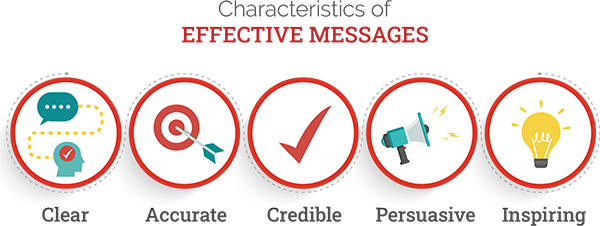
Tips for effective key messages
This includes…
- Create a hierarchy of messages
- Balance information and emotion
- Answer the “so what?” question
- Highlight action
- Bring energy to your words
- Adapt messages for different audiences
- Test drive the messages
High-level messages on climate and health in the SEARO region
- Across South-East Asia, climate change is jeopardising decades’ worth of health achievements, putting millions of people at risk. An estimated 3.8 million deaths, representing 28% of all deaths each year, could be averted by tackling environmental risks. Communities can play a major role as change agents, working in partnership with others to build resilience to climate-health impacts.
- What are the links between climate and health across South-East Asia? They include: rising temperatures, variable rainfall and snowfall, more frequent and intense extreme weather events, a rise in sea levels, and more glacial melting. These effects may lead to increased air pollution, reductions in water quantity and quality, more heat waves, more forest fires, and stronger floods and droughts. The many possible impacts on health include: more deaths and injuries; an increase in both infectious and non-communicable diseases; reduced nutritional well-being; and poorer mental health.
- Should we care about climate change and health? Yes, because climate change can affect one’s health at every stage of life, no matter the age. Babies exposed to air pollution may suffer damage to brain function, teenagers may struggle with mental health following disasters, adults may get hypertension from drinking water contaminated by rising seas, and elderly people may die in heat waves. These are just a few examples.
- While climate change is a threat to public health, it is also a threat to health systems. Stronger storms and flooding put health care facilities at risk of damage or destruction. Supply chains for vaccines, drugs and other supplies need to be made climate-resilient, so that care can be provided even when disasters strike. And health care workers need to be trained on how climate will change disease patterns.
- Climate change will affect the ability of children to participate in and maintain their education, with long-term impacts on their ability to compete in the workplace, secure their livelihoods and live healthy lives. In South-East Asia, a child who lives in above average temperatures is likely to attain fewer years of schooling than one who experiences average temperatures.
- Working together, we have a better chance of protecting health from climate change. Government must lead on climate change but individuals, community groups, NGOs and others have a role to play in accelerating action. Partnerships are indispensable to progress.
- Health care and school communities can provide platforms for change. Health care workers and students, particularly, can lead the way on climate-health resilience. They can collaborate with decision-makers on local agendas for change, expanding public education and awareness campaigns on climate-health issues, and catalysing community-level action.