Vector-borne diseases
ust as climate change affects human beings, it also influences the insects, parasites, viruses and other organisms that cause disease. Vectors, as these pathogens are known, respond to changes in temperature, rainfall and humidity. How they respond will determine where diseases expand and how transmissible they become.
Climate change is likely to alter the life cycle of the vector as well as the length of the season and geographic range of many infectious diseases. For example:
- Changes in temperature will influence the success some vectors have in reproducing, surviving for longer periods of time and flourishing in new geographic areas. In general, vectors do well at higher temperatures – up to a point. Certain mosquitoes reproduce more and bite more as temperatures rise, but once they rise above a certain threshold, reproduction and biting decrease. With malaria and chikungunya, incidence may decline in some areas as it becomes too hot for those mosquitoes to survive.
- An increase in humidity is associated with higher rates of malaria and diarrhoea, as mosquitoes generally survive for longer and disperse further, and replication rates of other bacterial and protozoan pathogens also rise.
- Changing rainfall patterns affect the availability of water sources that support vectors. For example, a major flood can wash away vector populations, limiting infection for a period of time. Stagnating water, however, can create habitat that enables vectors to flourish.
The ability to understand these changes is complicated by the fact that infectious disease is linked to many factors. These include: access to clean water and food; the quality of public health services; political instability or conflict; the development of drug resistance; the movement of people and animals; the use of land and water resources; and the implementation of vaccines and other control measures. For example, drug and insecticide resistance may be a key factor limiting public health interventions to reduce vector-borne diseases. The spread of dengue may be accelerated by the expansion of cities, especially slums. In addition, climate change is directly affecting ecosystems, which then affects biodiversity, and the emergence and spread of infectious diseases.
Climate drivers

Who is at risk?
- All people are at risk, but young children and the elderly are more likely to die or suffer severe symptoms
Ways we can adapt
Individuals and communities can...
- Launch education campaigns to alert the public to possible climate impacts on disease and appropriate responses
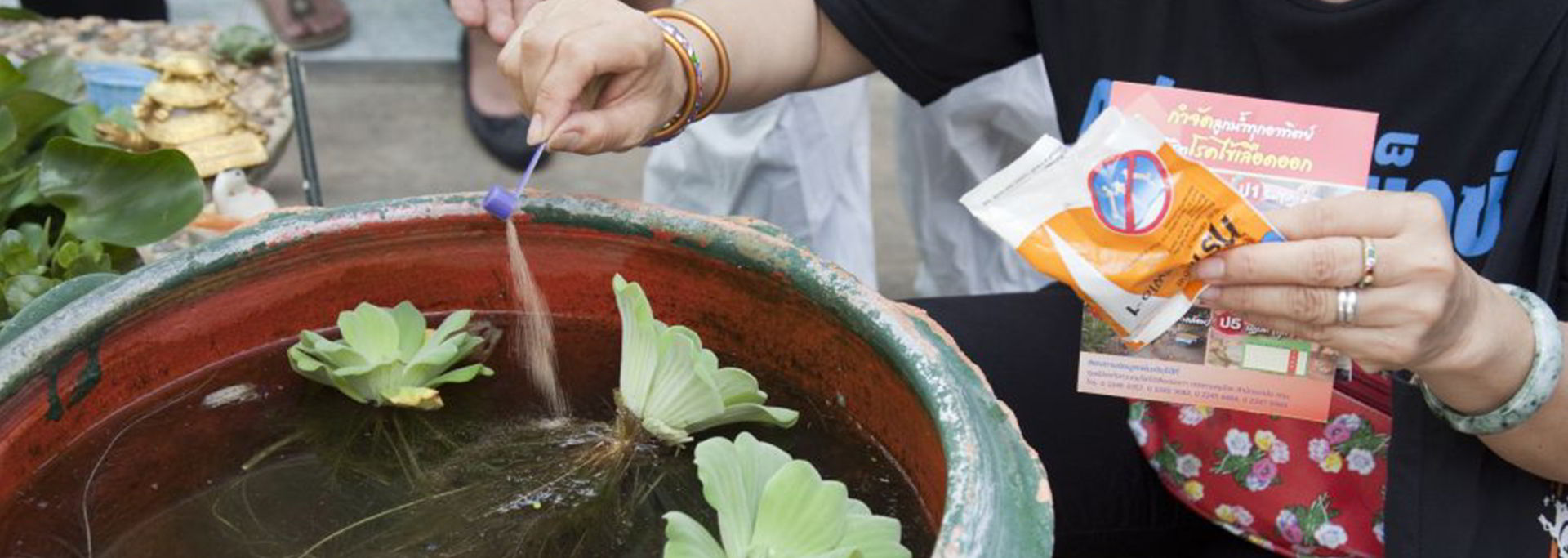
- Undertake household-level health and sanitation activities to reduce exposure, such as eliminating standing water where mosquitoes breed
- Collaborate with health officials on risk reduction strategies related to water, sanitation and agriculture practices
Policymakers and other health sector leaders can...
- Increase surveillance of public health and weather data to strengthen understanding of climate-disease links and catch early geographic shifts in vector range and vector-borne diseases (especially important in data-poor countries)
- Use surveillance and early warning information to help plan for medical supply chains, such as prepositioning of drugs, vaccines and personnel. For example, with Japanese Encephalitis Virus , swine diseases should be monitored to identify high risk zones for vaccination.
- Train medical professionals to increase awareness of the possibilities of: 1) vector-borne diseases in new areas, 2) changes in seasonal patterns and 3) preparation for diseases epidemics in areas where the population does not have established exposure
- Implement disease and vector control measures as local conditions change; for example, malaria may shift from endemic to seasonal patterns, necessitating a shift in vector control measures
- Develop vaccines and diagnostic tests
- Conduct risk modelling and mapping to better predict and prepare
Racing against climate change
The last decade’s experience with neglected tropical diseases in South-East Asia reads like the record of a prize fighter: Maldives, Sri Lanka and Thailand eliminate lymphatic filariasis, with Bangladesh and Timor-Leste close behind. India is yaws-free. Nepal and Myanmar eliminate trachoma. Bangladesh, India and Nepal almost defeat visceral leishmaniasis (kala-azar). Indonesia reduces schistosomiasis to very low levels.
International, national and local hea
Read more
Photo Credit: © WHO SEARO
Detecting dengue hotspots in Myanmar
While the risk of dengue is growing globally due to anticipated climate changes and increasing urbanisation, Myanmar is standing up to the threat with a proven remedy: surveillance and early warning.
Dengue incidence has grown dramatically in recent decades, with about half of the world's population now at risk. Across the South-East Asia region, the number of cases reported in 2020 rose in Bangladesh, India, Indonesia, Maldives, Nepal, Sri Lanka, Thailand an
Read more